
Consider Private Sale Car Loan in Canada When You Have Bad Credit
Discover whether a private sale car loan is the right option for your next vehicle in Canada. Learn what lenders require and how to prepare before applying with greater confidence.
A private sale car loan must satisfy both the lender’s credit requirements and its vehicle eligibility criteria.
With bad or no credit, approval may depend on stable income, manageable debts, a down payment and the vehicle’s condition. Preparing your financial documents and comparing financing options can help you avoid delays and choose a loan that better fits your budget.
How financing a vehicle from a private sale car loan works
A private sale car loan is normally arranged through a bank, credit union or specialized lender that accepts person-to-person purchases. The lender reviews the borrower, confirms vehicle eligibility and determines how funds will be released.
Depending on the lender, approved funds may be paid directly to the seller, issued through a bank draft or certified cheque, or released only after specific ownership and registration requirements are met. Procedures vary by institution.
Unlike dealer financing, the seller does not organize the application. You may need to coordinate the purchase agreement, inspection, ownership transfer and insurance requirements yourself. Before paying a deposit, ask whether the lender has restrictions on vehicle age, mileage, value or registration province. Many lenders apply objective limits, and some may not finance vehicles above a certain age or mileage threshold.

What lenders may check when your credit is weak
When reviewing a private sale car loan, lenders often consider more than a credit score. They may assess income stability, debt obligations and whether the proposed payment fits comfortably within your budget.
Common supporting items include:
- Government-issued identification;
- Recent pay stubs or other proof of income;
- Bank statements when requested;
- Proof of address;
- Seller and vehicle details;
- A signed purchase agreement or bill of sale;
- Proof of insurance, if required before finalization, funding or registration.
A larger down payment can reduce the financed amount, while a qualified co-signer may strengthen some applications. Neither guarantees approval, and a co-signer becomes legally responsible for the debt if payments are missed.
How to prepare for private sale car loan with no credit history
No credit is not the same as damaged credit, but lenders still have limited evidence of repayment behaviour. For a private sale car loan, demonstrating financial stability and selecting a reasonably priced vehicle can improve your chances.
Before applying:
- Review monthly income and fixed expenses;
- Save for taxes, registration, inspection and repairs;
- Avoid submitting unnecessary applications within a short period;
- Request written loan terms before committing;
- Compare the annual interest rate, borrowing cost and repayment schedule.
While multiple hard inquiries can affect a credit score, many credit-scoring models treat several auto-loan inquiries made within a limited shopping period as a single rate-shopping event. Even so, it is wise to compare lenders strategically rather than applying everywhere at once.
This preparation helps lenders evaluate the overall application instead of relying solely on a limited credit history.
Vehicle checks before money changes hands
The vehicle usually serves as collateral, so the lender must be satisfied with its identity, ownership status and value. A private sale car loan may be delayed if the VIN does not match registration records, the seller is not the registered owner or an outstanding lien is discovered.
Complete these checks:
- Match the VIN on the vehicle, registration and sale documents;
- Confirm the seller’s identity and ownership;
- Conduct the appropriate provincial lien search;
- Review vehicle history reports for damage, theft or branding;
- Arrange an independent mechanical inspection;
- Confirm local transfer, tax and registration requirements.
In many provinces, lien searches are conducted through systems governed by the Personal Property Security Act (PPSA) or equivalent provincial frameworks. Requirements vary by jurisdiction.
Provincial procedures also differ. Ontario private sellers generally provide a Used Vehicle Information Package (UVIP), while British Columbia and other provinces follow their own ownership-transfer processes.
Documents that protect buyer and lender
A clear paper trail makes the private sale car loan process safer. The bill of sale should identify the buyer, seller, vehicle, VIN, purchase price and transaction date. It should also record any conditions, such as financing approval, satisfactory inspection results or removal of an existing lien.
| Document or check | Why it matters |
| Registration and seller identification | Confirms the seller is connected to the registered vehicle |
| VIN verification and vehicle history | Helps identify theft records, branding or inconsistent information |
| Provincial or PPSA lien search | Reveals potential creditor claims against the vehicle |
| Independent inspection | Identifies mechanical or safety concerns |
| Bill of sale | Documents the parties, vehicle details and agreed price |
| Insurance confirmation | Supports registration and vehicle protection when required |
Keep copies of the loan application, disclosure statement, inspection report, bill of sale and ownership-transfer documents.
How to compare offers beyond the monthly payment
A low monthly payment can hide a longer repayment term and a higher overall borrowing cost. Compare the interest rate, loan term, fees, prepayment conditions and total amount payable over the life of the loan.
Also verify whether optional products have been added and whether insurance requirements apply before funding or registration.
Choose a vehicle that leaves room in your budget for fuel, maintenance, insurance and unexpected repairs. The best financing option is one that remains affordable after all ownership costs are considered.
Advantages and risks of a private sale car loan
Potential advantages
- Direct negotiation with the owner;
- Access to vehicles outside dealership inventory;
- Fewer dealer add-ons or sales pressures;
- Flexibility to walk away before signing.
Potential risks
- Greater responsibility for paperwork and verification;
- Fewer consumer protections than some dealership transactions;
- Possible liens or undisclosed mechanical issues;
- Fewer lenders willing to finance the purchase;
- Higher rates or stricter approval conditions.
In many provinces, private vehicle sales are commonly completed on an “as-is” basis. This means the buyer may have limited recourse if problems are discovered after the transaction, making inspections and vehicle-history checks especially important.
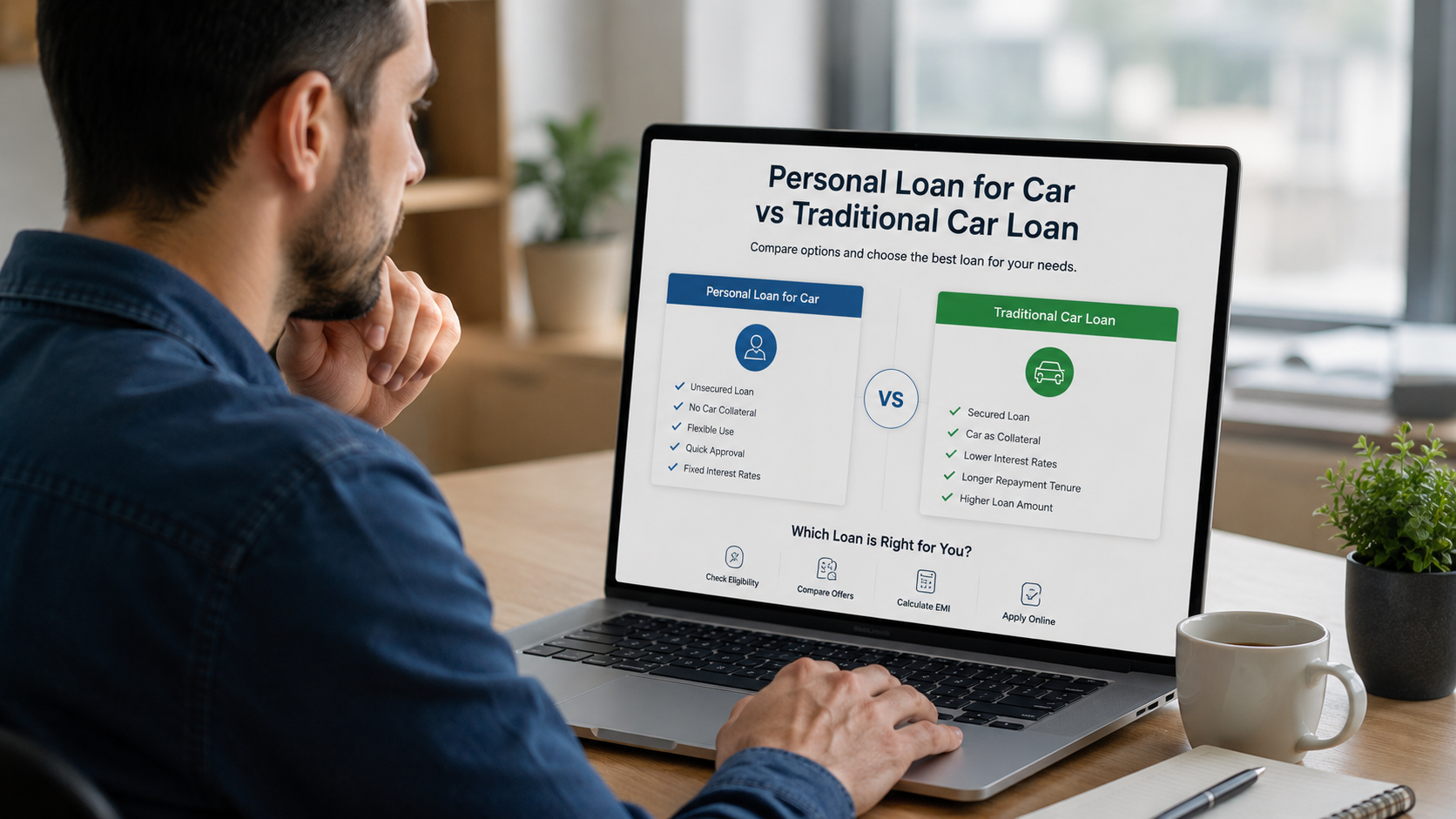
A safer path from approval to ownership
Obtain conditional financing before committing to full payment. Verify the vehicle, arrange an inspection, complete the appropriate lien search and confirm exactly how and when funds will be released.
Do not take possession until ownership transfer, insurance and registration requirements have been properly completed according to provincial rules.
A well-planned private sale car loan can make person-to-person vehicle purchases possible even with bad or no credit. Choose a realistic vehicle, compare the total borrowing cost and never skip the checks that help protect your ownership rights.
FAQ ❓
Can I finance a car bought from an individual in Canada?
• Yes. Many banks, credit unions and specialized lenders finance private vehicle purchases, provided both the borrower and vehicle meet their requirements.
Does bad credit automatically prevent approval?
• No. Lenders may also consider income, debt levels, employment stability, down payment size and vehicle value.
Why is a lien search necessary?
• A lien may give another creditor a legal interest in the vehicle. Discovering it before purchase can help prevent ownership complications.
Should I pay a deposit before approval?
• Be cautious with non-refundable deposits. If possible, ensure the agreement is conditional on financing approval and satisfactory vehicle checks.
Is a mechanical inspection required?
• Requirements vary by lender and province, but an independent inspection is strongly recommended and may be required for older or higher-mileage vehicles.
