
Best Car Loans after Auto Refinance: Upgrade Your Deal in Canada
If your credit has improved, now may be the right time to explore auto refinance and see whether you qualify for a more affordable car loan.
After months of on-time payments, lower revolving balances, and steadier income, you may be able to approach lenders with a stronger application.
The objective is not simply to secure another approval. Compare your current loan with new offers to find a replacement that improves affordability without restarting a long debt cycle.
Confirm that your credit profile has genuinely improved before auto refinance 📈
Review reports from Equifax and TransUnion before applying. Check payment history, balances, credit utilization, inquiries, and inaccurate information. Correct errors where possible and avoid taking on unrelated debt immediately before seeking new terms.
Lenders may also examine income stability, housing costs, existing obligations, vehicle value, mileage, condition, and the balance still owing. A better score helps, but it does not replace these underwriting factors.
Signs that you may be ready for a stronger offer 🔍
- A consistent record of on-time vehicle payments;
- Lower credit-card and line-of-credit balances;
- Stable or increased verifiable income;
- Fewer recent credit applications;
- A loan balance closer to or below the vehicle’s value;
- A vehicle that still meets lender age and mileage limits.
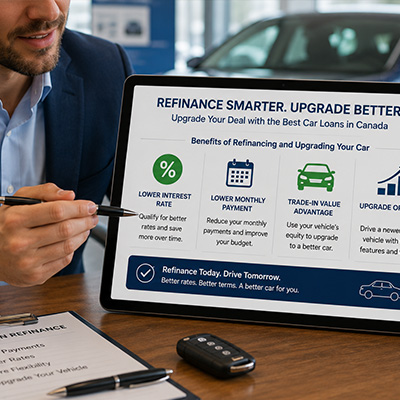
Request the current payout before comparing offers for auto refinance 📄
Ask your lender for a dated payout statement rather than relying only on the balance shown online. The payout may include accrued interest, administrative charges, or other amounts needed to close the account.
Compare that figure with the vehicle’s realistic market value. Auto refinance can be harder when the car is worth less than the payout because the replacement lender may not want to finance the full negative-equity amount.
Calculate your equity position carefully 🧮
Positive equity means the vehicle is worth more than the outstanding balance. Negative equity means you owe more than the car’s market value.
Do not solve negative equity by automatically trading the vehicle and adding the difference to another loan. This increases the new principal and may erase the benefit of better credit.
Compare auto refinance offers by total future cost 📊
Request written proposals from suitable banks, credit unions, dealerships, and reputable finance companies. Use the same payout amount and vehicle information for each comparison.
| Item | Current agreement | Proposed replacement |
| Principal | Current payout balance | Amount used to close the old loan |
| Rate | Existing APR | New APR |
| Term | Months remaining | New repayment period |
| Fees | Remaining charges | Application, discharge, or administration costs |
| Payment | Current scheduled amount | Proposed scheduled amount |
| End point | Existing maturity date | New payoff date |
| Total future cost | Remaining payments and charges | All replacement payments and charges |
Verified on: June 19, 2026. Availability and underwriting requirements vary by lender, borrower, vehicle, province, and territory.
A lower payment does not prove that the new agreement is cheaper. Extending repayment can reduce each instalment while increasing interest and keeping the vehicle tied to debt for longer.
Choose the best car loan for your actual objective: auto refinance 🎯
“Best” should mean the agreement that produces the strongest combination of APR, fees, term, payment, and total amount payable for your situation. It does not necessarily mean the lender offering the largest amount or longest schedule.
An auto refinance may be useful when it lowers the rate without materially extending the payoff date. It may also improve cash flow, but any additional months should be weighed against the extra interest and the vehicle’s expected life.
Questions to ask every prospective lender 📝
- Is the rate fixed or variable?
- Does the quote require a hard credit inquiry?
- Are there application, discharge, or registration fees?
- Does the vehicle meet age, mileage, and value rules?
- Can extra payments reduce principal without a charge?
- Are warranties or insurance products included?
- How long is the offer valid?
- When will the original lender receive the payout?
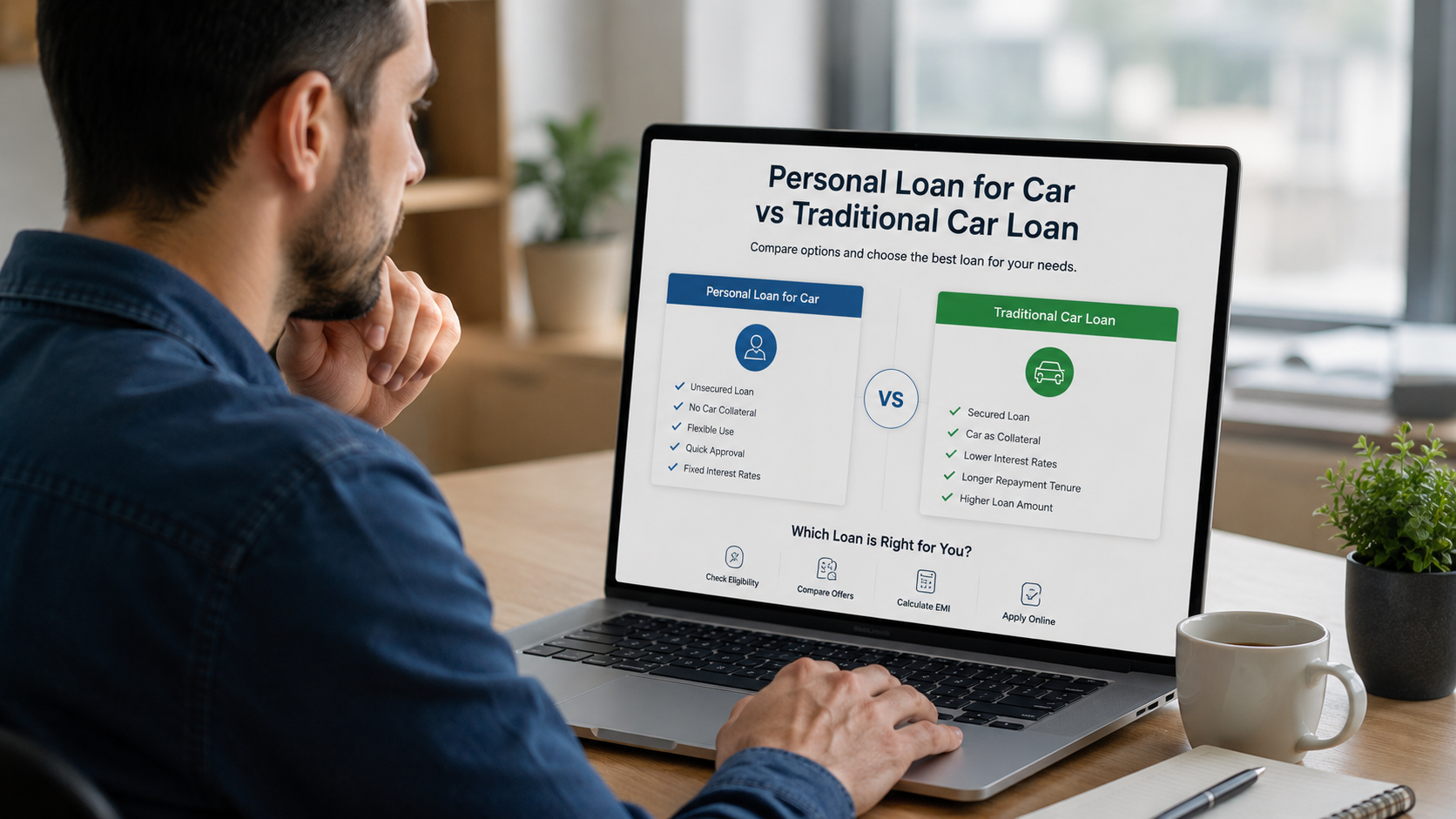
Protect the transition between the old and new loans 🛡️
Continue making every scheduled payment until the original lender confirms that the account has been paid and closed. A pending approval does not pause your current obligation.
Before signing an auto refinance agreement, review the disclosure statement, security interest, APR, payment frequency, fees, default terms, cost of borrowing, and total amount payable. Confirm that the VIN and borrower information are accurate.
After funding, obtain proof that the old balance was discharged. Keep the payout statement, replacement contract, payment confirmation, and any provincial lien-registration documents.
Avoid upgrading the vehicle simply because credit improved 🚘
Better credit may increase your purchasing power, but replacing a reliable vehicle can restart depreciation, taxes, fees, and a new repayment term. First test whether improving the existing loan provides a stronger outcome than buying another car.
When a vehicle change is necessary, separate the trade-in value, outstanding payout, new selling price, and financing costs. Do not let negative equity disappear inside a monthly payment calculation.
Make the upgraded deal support debt-free ownership 🔑
The purpose of auto refinance is to create a clearer and more affordable path to owning the vehicle—not to keep the borrower in permanent renewal.
Compare total future costs, preserve emergency savings, and choose the shortest sustainable term. An improved credit profile has the greatest value when it reduces borrowing costs and brings the payoff date closer.
FAQ ❓
Does better credit guarantee approval for a lower rate?
• No. Lenders also assess income, debts, vehicle eligibility, equity, and their own underwriting requirements.
Should I accept the offer with the lowest payment?
• Not automatically. Compare the APR, fees, term, total future interest, and payoff date.
Can negative equity prevent refinancing?
• It can limit options. A lender may decline, finance only part of the shortfall, or require cash toward the difference.
Should I stop paying the original lender after approval?
• No. Continue payments until written confirmation shows that the original account has been fully closed.
What documents should I keep afterward?
• Retain the payout statement, disclosure, signed agreement, proof of payment, and confirmation that the old security interest was discharged.
