
Motorcycle Financing: Discover How to Compare Loans and Choose the Right Bike for Your Budget
Explore motorcycle financing, learn how different loan terms can affect your budget, and discover a smarter way to prepare for your next motorcycle purchase.
Motorcycle financing can help riders purchase a new or used bike while dividing the cost into scheduled payments over time.
From lightweight motorcycles designed for newer riders to cruisers and long-distance touring models, financing can apply to motorcycles across very different price categories.
Compare Harley-Davidson used motorcycle financing options, repayment terms, and ownership costs before choosing your next ride.
Start Your Motorcycle Financing Plan by Choosing the Right Type of Bike 🏍️

Before comparing loans, think carefully about the motorcycle you actually need.
Choosing the correct category can have a greater impact on your finances than simply searching for the smallest monthly payment.
A newer rider interested in commuting may have little reason to finance a large touring motorcycle.
Similarly, an experienced rider planning cross-country trips might find the additional comfort and equipment of a touring model valuable.
Riders can explore different potential financing sources before committing to a motorcycle purchase. Loan availability and eligibility depend on the institution and applicant.
Banks may provide motorcycle or recreational vehicle loans, while credit unions can offer financing to eligible members.
Online lenders represent another possibility, and dealerships can facilitate financing through participating financial institutions.
Manufacturer-affiliated financing programs may also be available for qualifying buyers and eligible motorcycles.
Potential financing channels include:
- Traditional banks — May provide direct loans depending on available lending products.
- Credit unions — Eligible members can research institution-specific motorcycle financing.
- Online lenders — Can provide digital applications and financing research tools.
- Dealership financing — Dealers may facilitate applications with participating lenders.
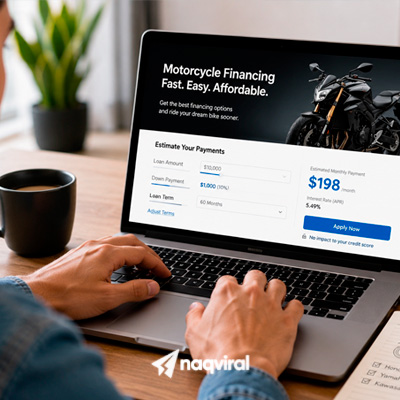
What Can Influence Your Motorcycle Financing Terms? 💰
Lenders can consider multiple factors when evaluating a motorcycle loan application.
Credit history may influence potential rates and approval, but it is not necessarily the only factor involved.
Income and existing financial obligations may help determine repayment capacity. The requested financing amount and down payment can also affect the transaction.
The motorcycle itself can matter as well. Some lenders establish restrictions involving age, mileage, market value, or purchase source.
Buyers interested in older motorcycles should investigate lender requirements before negotiating a purchase, particularly when buying from a private seller.
New and Used Motorcycles Create Different Financing Opportunities ⚖️
A new motorcycle provides an ownership experience without previous mileage or riding history. Buyers can also receive applicable manufacturer warranty coverage and access current technology.
Used motorcycles can potentially provide a lower purchase price, reducing the amount that needs to be financed. However, mechanical condition deserves careful attention.
An inexpensive used motorcycle requiring immediate tires, brakes, battery replacement, and other maintenance can quickly become more costly than expected.
Buyers should consider checking:
- Tire condition and age
- Brake components
- Chain and sprockets
- Battery condition
- Suspension
- Engine fluids
- Signs of fluid leaks
- Accident or drop damage
- Maintenance records
- Overall mileage
A professional inspection can provide additional information when purchasing an unfamiliar motorcycle, particularly in private-party transactions.
Calculate the Real Cost of Motorcycle Ownership Before Financing 🧤
The loan payment is only one component of owning a motorcycle. First-time riders can face several additional expenses immediately after purchasing their bike.
Protective riding equipment should be part of the budget from the beginning. Riders may need a quality helmet, jacket, gloves, boots, and protective pants.
Insurance is another important expense. Costs can vary according to the motorcycle, rider, location, coverage level, and other individual factors.
Your motorcycle budget should account for:
- Monthly financing payment
- Insurance
- Helmet and protective gear
- Registration
- Fuel
- Routine maintenance
- Tires
- Chain and sprocket maintenance when applicable
- Storage when necessary
- Unexpected repairs
Understanding these expenses before applying for motorcycle financing can help establish a more realistic purchase budget.
Match the Motorcycle to Your Riding Experience and Financial Goals 🛣️
The fact that financing is available does not mean every motorcycle is appropriate for every rider.
Newer riders may benefit from manageable motorcycles such as the Honda Rebel 500, Kawasaki Ninja 500, or Yamaha YZF-R3, depending on individual preferences and physical fit.
More experienced riders can explore specialized motorcycles.
Adventure enthusiasts might research the Honda Africa Twin, while long-distance riders may consider machines such as the Honda Gold Wing.
Buyers should evaluate each motorcycle individually and consider performance, weight, seat height, intended use, insurance, and purchase cost.
Financing should support the motorcycle decision rather than determine it.
Compare easiest financing options, repayment terms, and ownership costs before making your final decision.
Avoid Common Motorcycle Financing Mistakes Before Signing ⚠️
Avoid financing the maximum amount available simply because you qualify for it. Your personal budget should determine the appropriate purchase price.
Do not focus exclusively on monthly payments. A smaller installment can result from extending the loan, potentially increasing total borrowing costs.
Another mistake is purchasing a motorcycle before obtaining an insurance estimate. The cost of coverage can influence the affordability of certain models.
Finally, never forget maintenance and protective equipment. Buying an expensive motorcycle without leaving sufficient money for proper gear and routine maintenance can create unnecessary financial pressure.
Build a Motorcycle Financing Strategy That Makes Sense for the Long Road 🚀
A strong motorcycle financing strategy begins with identifying the type of bike that genuinely matches your experience and intended use.
Establish a complete ownership budget that includes financing, fuel, registration, and potential repairs before deciding how much motorcycle you can comfortably afford.
Research available financing possibilities through banks, and dealership networks, comparing APR, repayment duration, monthly payments, and total borrowing costs.
A reasonable down payment can reduce the financed balance, while selecting an affordable repayment period can help limit long-term interest expenses.
Most importantly, avoid allowing loan approval to determine which motorcycle you purchase.
Choosing a bike that fits both your riding abilities and financial priorities can make ownership more enjoyable and sustainable long after the excitement of the initial purchase.
FAQ ❓
1. What is motorcycle financing used for?
- Motorcycle financing can allow eligible buyers to borrow money toward the purchase of a qualifying new or used motorcycle and repay the balance over an agreed period.
2. What types of motorcycles can potentially be financed?
- Depending on lender requirements, financing may be available for qualifying sport, standard, cruiser, adventure, touring, and other motorcycle categories.
3. Can I get motorcycle financing for a used bike?
- Some lenders finance eligible used motorcycles, although requirements involving age, mileage, value, and seller type can vary.
4. Is making a down payment beneficial when financing a motorcycle?
- A down payment can reduce the financed balance and potentially lower monthly and total borrowing costs, depending on the final loan terms.
5. What should I compare before accepting motorcycle financing?
- Compare APR, repayment duration, monthly payment, insurance expenses, and complete ownership costs before committing to financing.
