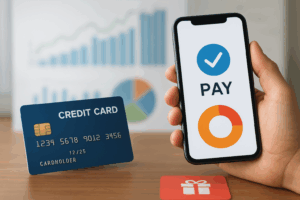
Consumer spending patterns have changed significantly in recent years. Digital payments, subscription services, online shopping, and food delivery now represent a larger share of monthly expenses. Cash back cards have evolved to reflect this shift.
In a world shaped by inflation, rapid technological change, and global uncertainty, smart financial planning has become more important than ever. In 2026, individuals who understand how to manage money strategically are not just surviving—they are building long-term wealth and financial freedom. This article explores practical, modern financial strategies designed to help you take control of your finances and create a stable future.
For young Australians, investing early is one of the smartest financial decisions to build long-term wealth. With rising living costs, fluctuating interest rates, and an evolving global economy, relying solely on savings accounts is no longer enough. Understanding modern investment strategies allows young investors to grow their money while managing risk effectively. This guide explores practical investment options that align with Australia’s financial landscape, focusing on ETFs, index funds, and digital assets.
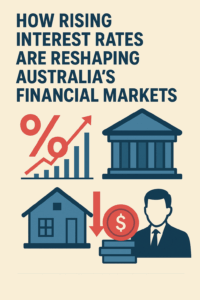
Australia is undergoing one of its most significant financial shifts in decades. Rising interest rates are transforming how consumers borrow, how businesses invest, and how markets react. While higher rates are typically used to control inflation, they also influence nearly every corner of the economy—from housing prices to the performance of the ASX.
The global financial market has entered a new chapter—one defined by rapid digital transformation, shifting consumer behavior, and geopolitical uncertainty. Unlike previous decades, where investment decisions were often based purely on traditional indicators like interest rates or corporate earnings, today's investors must navigate inflation concerns, global supply chain disruptions, technological acceleration, and changing policy landscapes.Smart investors are learning that adaptability is no longer optional—it’s essential. The key to thriving in today’s financial environment lies in understanding major global trends and positioning investments accordingly.
Over the last decade, Australia has witnessed a significant shift in investment behavior. While many investors once relied heavily on individual stock picking, active fund managers, and traditional superannuation portfolios, a new trend has taken hold: passive investing through Exchange-Traded Funds (ETFs).
In early 2026, the Social Security Administration (SSA) announced that benefits for approximately 75 million Americans will rise by 2.8 percent. This adjustment — known as the cost-of-living adjustment (COLA) — will translate to an average increase of about US$56 per month for retired workers. Though modest, the raise sends a message: the government is proceeding with incremental support to preserve retirees’ purchasing power amid ongoing inflation pressures. As the SSA puts it: “Social Security is a promise kept, and the annual cost-of-living adjustment is one way we are working to make sure benefits reflect today’s economic realities.” However, many seniors say the increase still falls short of covering rising costs in housing, healthcare and daily expenses.
In the U.S., credit cards are more than just a payment tool — they are a reflection of the nation’s financial habits, lifestyle choices, and evolving priorities. From record-high debt levels to the rise of digital wallets and buy-now-pay-later (BNPL) options, the latest credit card trends tell a fascinating story about how Americans spend, save, and manage their financial well-being. This article explores the most recent data and insights, revealing what these credit card patterns truly say about U.S. consumers in 2025.
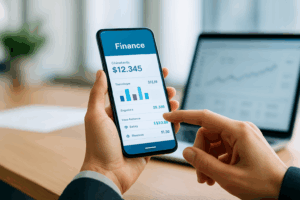
In a world where every dollar counts, managing your finances efficiently has never been more important. Gone are the days of paper budgets and manual tracking. Today, a wide range of finance apps can help you take control of your money, track expenses, invest wisely, and plan for the future—all from the palm of your hand.
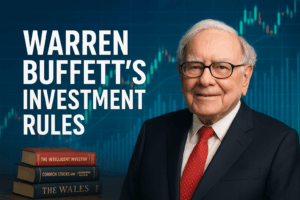
Warren Buffett, known as the Oracle of Omaha, is one of the most successful and respected investors in history. As the CEO of Berkshire Hathaway, he built an empire valued at hundreds of billions of dollars through disciplined, long-term investing.
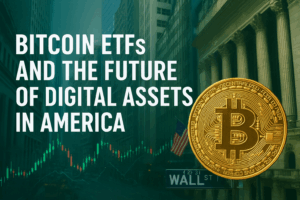
Bitcoin Exchange-Traded Funds (ETFs) have emerged as a revolutionary bridge between traditional finance and the cryptocurrency world. A Bitcoin ETF allows investors to gain exposure to Bitcoin without the complexity of owning or managing the digital currency directly. Unlike futures-based ETFs, spot Bitcoin ETFs hold actual Bitcoin as their underlying asset, tracking its market price in real time.
For millennials, managing money has never been more important. Rising living costs, student loan debts, and the gig economy have created new financial challenges. Smart budgeting is no longer just a skill — it’s a necessity. By learning effective budgeting strategies, millennials can build wealth, reduce debt, and achieve financial independence faster than previous generations.Keywords: smart budgeting tips, budgeting for millennials, financial freedom, personal finance management.