
Mitsubishi Outlander horsepower comes from a new mild-hybrid engine for 2026
Mitsubishi Outlander horsepower for the regular U.S. 2026 model belongs to the new turbo mild-hybrid powertrain; older engine figures describe a different configuration.
The Nissan Rogue trims provide another equipment comparison, while this vehicle needs its own engine and drivetrain identification. During a demonstration, assess ordinary acceleration, transmission response and passenger comfort rather than choosing from a power figure on its specification sheet.
Read Mitsubishi Outlander horsepower alongside the engine’s torque delivery ⚙️
The manufacturer publishes 174 hp at 6,000 rpm and 206 lb-ft at 3,000–4,000 rpm. Those operating speeds belong to the ratings. Keeping them visible avoids suggesting that maximum power and maximum torque are produced identically throughout every stage of acceleration.
For Mitsubishi Outlander horsepower, the turbocharged engine and mild-hybrid assistance form a particular powertrain, distinct from the plug-in hybrid. Mild-hybrid identification should not be interpreted as a promise of a separate electric-only driving range. Check the actual model name and documentation when comparing vehicles with similar exterior styling.
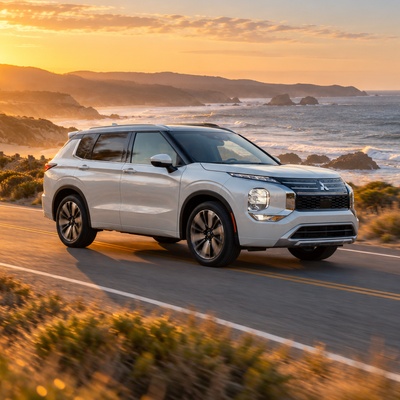
How the CVT delivers Mitsubishi Outlander horsepower 🔎
The American ES reference uses a continuously variable transmission. Its operating behaviour differs from a conventional automatic with fixed mechanical ratios. Evaluate smooth low-speed movement, response when joining traffic and the way the powertrain settles at cruising speed, rather than treating every change in engine speed as evidence of a fault.
A test drive should remain legal and appropriate to road conditions. You do not need maximum acceleration to assess visibility, control and routine response. Ask the representative to explain the drive modes and confirm whether the demonstration vehicle has the drivetrain and equipment you intend to order.
Choose traction for the roads you actually use 🛣️
Mitsubishi offers two-wheel drive and S-AWC configurations in the American range. The powertrain’s published engine output does not, by itself, decide which arrangement suits your roads. Traction hardware and suitable tires answer different questions, particularly where weather and surface conditions change during the year.
The Grand Cherokee ownership discussion separates fuel, insurance and borrowing for another SUV. Use the same categories here, with Outlander-specific quotations; its engine output does not determine your premium or the price of scheduled maintenance.
A focused test-drive plan for daily use 📋
Describe your normal routine before arranging the visit. If possible, choose a route with the kind of junctions and traffic you regularly encounter. Record impressions of the identified demonstration vehicle, including any equipment differences from the proposed purchase.
- City movement: assess visibility, pedal response and smooth creeping in traffic.
- Junctions: examine response during a safe, ordinary acceleration.
- Cruising: judge noise and comfort at legal road speeds.
- Passengers: check seating access and the load you expect to carry.
- Drivetrain: confirm whether the car is 2WD or S-AWC.
- Controls: learn the relevant modes before interpreting their behaviour.
Connect Mitsubishi Outlander horsepower to consumption and carrying limits 📊
Horsepower is an engine-output measurement, while fuel economy and towing are separately specified ratings with their own conditions. More power does not automatically establish a lower fuel bill, and a strong torque figure alone cannot determine which trailer or load the vehicle may carry.
Assess Mitsubishi Outlander horsepower using the exact configuration and the task you need it to perform. For regular family trips, passenger comfort, usable luggage space and the route matter alongside acceleration. Confirm the actual vehicle’s loading labels and follow the manual before adding accessories or towing equipment.
Fuel ratings alongside Mitsubishi Outlander horsepower ⛽
| 2026 configuration | EPA city / highway / combined | Practical comparison |
|---|---|---|
| 2WD | 26 / 31 / 28 mpg | Identify the front-drive vehicle before budgeting |
| S-AWC | 26 / 30 / 27 mpg | Evaluate traction requirements separately from economy |
| Either drivetrain | Actual use varies with conditions | Track miles and gallons across representative fills |
The combined values follow the EPA methodology; they should not be replaced with a simple arithmetic average of city and highway mpg. Use the official label for the unit offered, then measure your own use rather than promising that the highway number will describe every commute.
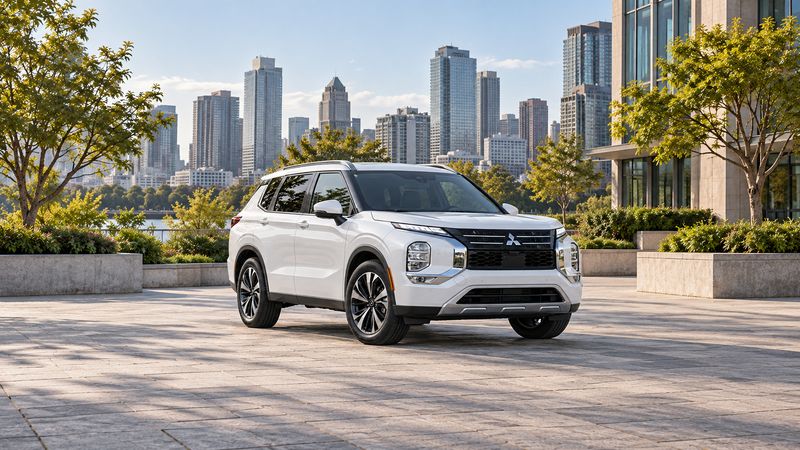
Additional U.S. 2026 ES 2WD technical sheet 🧰
This reference identifies the non-plug-in mild-hybrid ES without a sunroof.
| Specification | Manufacturer information |
|---|---|
| Engine / displacement | Turbocharged four-cylinder, 1,499 cc |
| Assistance | 48V mild-hybrid belt starter-generator |
| Power | 174 hp at 6,000 rpm |
| Torque | 206 lb-ft at 3,000–4,000 rpm |
| Transmission / drive | CVT / front-wheel drive |
| Recommended fuel | Regular unleaded gasoline |
| Length × folded-mirror width × height | 185.8 × 74.7 × 68.7 inches |
| Unfolded-mirror width / wheelbase | 84.4 / 106.5 inches |
| Curb weight / seating | 3,770 lb / seven |
| Cargo behind third row / front seats | 10.9 / 64.3 SAE cubic feet |
| Fuel tank | 14.5 U.S. gallons |
The table keeps engine, body and loading context together without inferring a purchase price or maintenance invoice from them. A different drivetrain or equipment package needs its own weight and fuel reference. Maximum cargo volume also requires rear seats to be folded.
Make the final choice after the identified demonstration 🚙
Use Mitsubishi Outlander horsepower to recognize the current engine, then decide whether the complete vehicle suits your routine. Retain notes about response, seating, visibility and cruising comfort. If the demonstration used another configuration, resolve the differences before accepting a quotation for an untested alternative.
The Silverado configuration guide concerns a pickup with different carrying requirements. If your decision involves towing or hauling, compare the actual task and vehicle labels rather than treating horsepower as a substitute for payload or trailer limits.
FAQ ❓
1. Does the American model retain the previous 2.5L specification?
The identified 2026 non-plug-in model uses the new 1.5L turbo mild-hybrid powertrain.
2. Are peak power and peak torque quoted at the same rpm?
No. The published figures identify different engine-speed conditions.
3. Does mild-hybrid naming promise plug-in electric range?
No. The plug-in hybrid is a separate powertrain and must be evaluated separately.
4. Can I use one combined fuel rating for both drivetrains?
No. The manufacturer distinguishes the 2WD and S-AWC EPA references.
5. Where should I confirm the current American engine and ratings?
Check Mitsubishi’s U.S. model information and the specification for the chosen drivetrain.
