
Learn Car Loan Payoff Strategies in Canada
If you’re considering paying off your car loan early, review your agreement first to see whether it can reduce interest costs and improve your monthly budget.
Payment frequency, prepayment rules, interest calculation, and lender fees determine whether an extra amount shortens the term, lowers interest, or simply pays the next instalment early.
Before making an extra payment, compare the remaining debt with your emergency savings, higher-interest balances, and essential vehicle expenses to ensure it is the most beneficial financial decision.
Review your car loan agreement before paying extra 📄
Start with the current balance, APR, scheduled payment, maturity date, and an official payout quote. Then check whether the agreement permits additional principal payments, accelerated schedules, or full early repayment without a charge.
Ask the lender to explain how extra money is applied. A payment labelled “extra” may reduce principal, cover accrued interest first, or be treated as an advance on upcoming instalments. Request written confirmation instead of assuming the balance will fall as expected.
Numbers to collect before choosing a strategy 🔍
- Current principal and payout amount;
- Interest rate and remaining term;
- Payment amount and frequency;
- Prepayment privileges or fees;
- Method used to apply additional funds;
- Vehicle value and equity position;
- Emergency savings available after the payment.
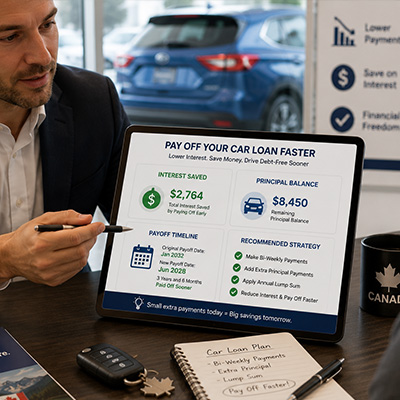
Use bi-weekly payments only when they accelerate repayment 🗓️
Changing from monthly to bi-weekly payments does not automatically create savings. The benefit appears when the annual amount paid increases or principal reaches the lender sooner under the contract’s calculation method.
For example, paying half a monthly amount every two weeks produces 26 half-payments, equal to 13 monthly payments over a year. However, a lender may calculate its regular bi-weekly schedule differently, so compare the annual total and payoff date before switching.
Regular and accelerated schedules compared 📊
| Payment method | Possible result | What to verify |
| Monthly schedule | Standard repayment path | Due date and remaining term |
| Regular bi-weekly | Same annual obligation divided differently | Annual amount and interest calculation |
| Accelerated bi-weekly | Extra annual principal may be paid | New payoff date and total interest |
| Added amount per payment | Balance may decline faster | Whether it goes directly to principal |
Verified on: June 19, 2026. Actual savings depend on the agreement, interest calculation, fees, and payment processing.
Apply lump sums without weakening your safety net 💰
A tax refund, work bonus, inheritance, or accumulated savings can reduce the outstanding balance. Before making a lump sum on a car loan, request instructions and confirm whether the lender will apply it to principal.
Keep enough cash for insurance, maintenance, repairs, housing, and emergencies. Paying down secured vehicle debt while carrying a much higher-rate balance elsewhere may not be the most efficient use of limited funds.
Build smaller extra payments into the budget 🧮
Large contributions are not the only option. Rounding each instalment upward or scheduling a modest recurring extra amount can create steady progress without exhausting savings.
- Choose an amount that remains sustainable;
- Label or direct it as the lender requires;
- Check the next statement for correct application;
- Recalculate the estimated payoff date periodically;
- Stop or reduce extras when essential expenses rise.
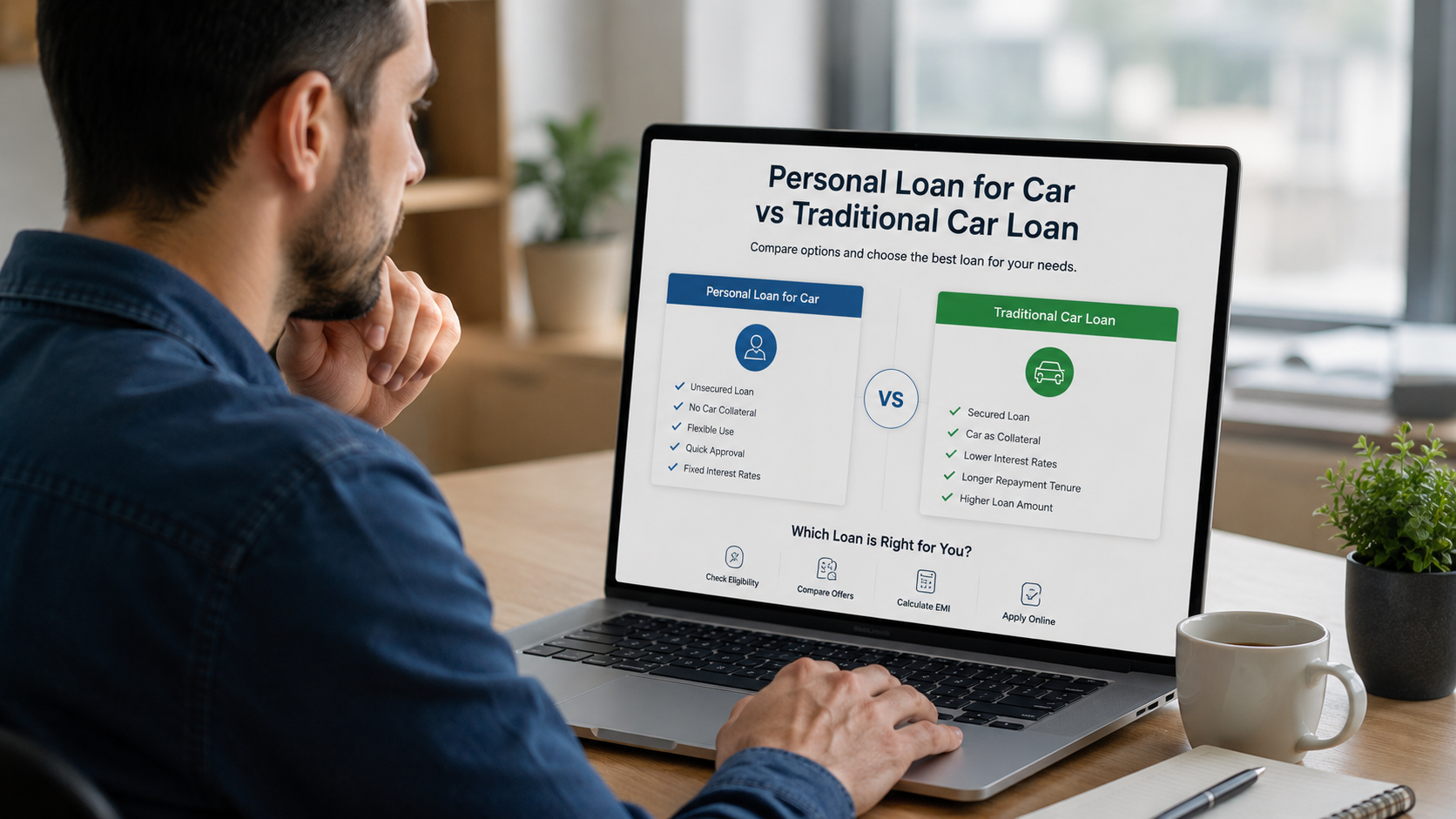
Compare early repayment with auto refinancing for car loan 🔄
When credit and income have improved, refinancing may lower the rate or change the payment structure. Compare the new APR, fees, term, total future interest, and payoff date with the existing car loan before replacing it.
Extending the term can lower the instalment while increasing total cost. Refinancing should create a measurable improvement, not restart a long debt cycle on an ageing vehicle.
Payoff approaches and their main trade-offs ⚖️
| Strategy | Potential advantage | Main limitation |
| Extra principal each payment | Gradual interest reduction | Requires consistent spare cash |
| Accelerated bi-weekly schedule | May add an annual payment equivalent | Contract must process it as intended |
| Lump-sum contribution | Immediate balance reduction | Reduces available savings |
| Full early payoff | Ends scheduled debt payments | Fee or payout procedure may apply |
| Lower-rate refinance | May reduce future interest | New fees and extended term can offset savings |
Protect payment history while accelerating the debt 🛡️
Continue every required instalment until the lender confirms the account is fully paid. An extra payment normally does not authorize you to skip the next scheduled withdrawal unless the lender states this in writing.
Use reminders or pre-authorized debits for the regular obligation, monitor statements, and retain receipts. If the lender reports the account to credit bureaus, consistent on-time payments can support the broader rebuilding process, although no single payoff strategy guarantees a score increase.
Request proof when the balance reaches zero: car loan ✅
Before the final payment, obtain a dated payout quote because interest or fees may change the amount required. After paying, request confirmation that the account is closed and the lender’s security interest will be discharged through the applicable provincial or territorial process.
Keep the final statement, receipt, discharge confirmation, and original agreement. Verify the status before selling or trading the vehicle.
Make your car loan payoff plan sustainable 🔑
The strongest car loan strategy is not necessarily the fastest one. It reduces interest and shortens repayment while preserving emergency savings and keeping every required payment on time.
Review the contract, calculate the annual impact of bi-weekly payments, and confirm how lump sums are processed. A documented, affordable approach can move you toward debt-free vehicle ownership without creating a new financial setback.
FAQ ❓
Do bi-weekly payments always reduce interest?
• No. Savings depend on whether the annual amount paid increases and how the lender calculates and applies payments.
Will a lump sum lower my required payment?
• Not necessarily. It may reduce principal and shorten the term while leaving the scheduled instalment unchanged.
Can a lender charge for early repayment?
• Contract terms vary. Review the agreement and request a payout quote showing any applicable charge.
Should I use all my savings to clear the balance?
• Usually not. Preserve funds for emergencies, insurance, maintenance, and essential household expenses.
What should I obtain after the final payment?
• Request proof that the account is closed and confirmation that the lender’s security interest will be discharged.
