
The Buick Envista engine for Canadian commuting and everyday response
The Buick Envista engine combines a small turbocharged gasoline unit with a conventional automatic, making transmission response and your usual terrain relevant to a Canadian purchase.
The 2026 Preferred FWD is the technical reference, using Canadian fuel units and local equipment. A Canadian Rogue comparison offers an alternative SUV assessment; keep its powertrain and running costs separate when judging what suits your route.
The Buick Envista engine works with a conventional automatic ⚙️
The Canadian configuration pairs the turbo engine with a six-speed automatic rather than a CVT. That distinction describes the transmission design; it does not establish that every shift will suit every driver. Try low-speed acceleration, gradual speed changes and a safe highway merge on the demonstration route.
Turbocharging allows a small-displacement engine to deliver the published torque, but its response still depends on engine speed and demand. Assess the car with your intended use in mind. A brief solo drive on level roads may not reveal the experience of a loaded trip through hills.
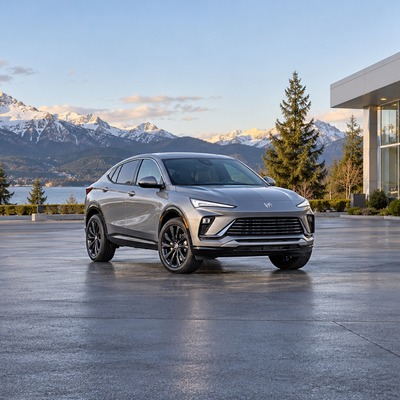
Buick Envista engine torque needs a driving context 🛣️
The 162-lb-ft GM estimate provides a reference for the identified powertrain. It should not be converted into a claim that the vehicle will accelerate equally under every load or outperform a different car with a similar number. Vehicle weight, gearing and conditions remain part of the result.
When evaluating a demonstration, notice how the transmission selects a gear after a modest increase in throttle. The important question is whether the response is predictable for your manoeuvre. Avoid trying to prove performance limits or recreate aggressive acceleration figures on a public road.
Evaluate the Buick Envista engine against route and season ⛽
The Canadian model page publishes 8.4 L/100 km in the city and 7.4 on the highway under approved testing methods. Those figures support comparison with similarly measured vehicles. They do not promise an annual fuel bill without knowing distance, fuel price and actual conditions.
For the Buick Envista engine, short trips, cold starts and traffic affect consumption. Record your driving mix and update the budget with real fuel use after purchase. Keep Canadian L/100 km separate from U.S. mpg, and include other ownership costs in the annual plan.
Five points to observe during a powertrain demonstration 📋
Use routine driving situations to judge the complete powertrain. The observations are personal fit checks, not a laboratory test or evidence that every other example will behave identically.
- Starting: assess cold or normal startup behaviour when a representative demonstration is available.
- Low speed: notice smoothness during gradual acceleration and stop-and-go travel.
- Merging: evaluate response at legal speeds with a safe margin.
- Hills: ask to include a route similar to your usual terrain.
- Noise: judge engine and transmission sound from your normal seating position.
The same engine does not make every trim identical 📊
Preferred, Sport Touring and Avenir should be compared for their Canadian equipment. The shared engine does not tell you which seats, assistance packages or wheels are installed. Those differences can affect comfort and convenience without changing the fundamental engine and drive layout.
Front-wheel drive should be considered explicitly when winter capability is a priority. Suitable tyres and road conditions matter, and electronic assistance does not add an all-wheel-drive system. Compare an AWD alternative on its own merits instead of assuming that a higher Envista equipment level provides it.
Reading Buick Envista engine data for a Canadian route 🗂️
| Powertrain point | Canadian reference | Useful interpretation |
|---|---|---|
| Engine | 1.2-litre ECOTEC turbo gasoline | Identifies the unit; displacement is not a full performance judgment |
| Transmission | Six-speed automatic | Assess gear changes during a legal demonstration |
| Drive | Front-wheel drive | Consider winter tyres and route requirements |
| Consumption | 8.4 city / 7.4 highway L/100 km | Standardised reference, not an individual commute promise |
Reading the figures together is more useful than isolating horsepower. The engine and automatic identify what you are testing, while the fuel ratings provide a labelled benchmark. Your route and passenger needs determine how those characteristics translate into daily use.
2026 Canadian Preferred technical profile 📐
| Specification | Identified configuration |
|---|---|
| Engine | ECOTEC 1.2-litre turbo gasoline |
| GM-estimated output / torque | 137 hp at 5,000 rpm / 162 lb-ft at 2,500–4,000 rpm |
| Transmission / drive | Six-speed automatic / front-wheel drive |
| Fuel consumption, city / highway | 8.4 / 7.4 L/100 km, Canadian approved test methods |
| Seats | Five |
| Display | 11-inch diagonal HD colour touchscreen |
| Brakes | Four-wheel antilock disc brakes |
| Front suspension | MacPherson strut |
| GVWR | 1,930 kg; gross rating, not curb weight |
The Buick Envista engine specification should be kept with the Canadian configuration and test units. GM-estimated output is not a personal dynamometer result, and the gross weight rating is not the crossover’s curb weight. Neither figure establishes a maintenance interval or a local insurance premium.
Match the powertrain to a normal week of driving 🧭
Match the Buick Envista engine to a normal week of driving, considering legal-road response, passengers and fuel use. Record the model year, trim and tyres of the demonstration vehicle. If the purchase car differs, check whether that changes the observations behind your decision.
Before ordering, obtain Canadian maintenance guidance and an itemised local quotation. Keep driving preferences separate from unsupported promises about reliability or savings. If borrowing, review Canadian loan preparation alongside the purchase budget, rather than treating the engine specification as a financing recommendation.
FAQ ❓
1. Is the transmission a CVT?
- The cited Canadian 2026 model uses a six-speed automatic transmission.
2. Does the higher equipment level change the basic engine?
- The Canadian trim selection lists the same 1.2-litre turbo engine; verify any special configuration separately.
3. Can the highway rating predict winter city consumption?
- No. The published highway result and a winter urban commute describe different conditions.
4. Does turbo torque prove the vehicle suits every loaded trip?
- No. Assess passenger load, gradient and transmission response through an appropriate demonstration.
5. Where can I verify the Canadian configuration?
- Review the Canadian model information and the dealer’s matching configuration summary.
